Born in America = Citizen? The Law That Could Shake the US Economy
Everything Feels Normal… Until It Doesn’t
A baby is born in New York.
No paperwork. No waiting. No visa.
Just by being born on American soil… that child becomes a US citizen.
This has been the rule for over 150 years.
But what if that rule suddenly disappears?
What if being born in America… is no longer enough?
At first glance, this sounds like an immigration issue.
But look deeper — and you’ll realize something far more serious:
👉 This isn’t just about citizenship.
👉 This is about the future of the US economy itself.
Because behind this debate lies a hidden truth:
America is running out of people… and it may not even realize it yet.
📜 What Is Birthright Citizenship (And Why It Exists)
Birthright citizenship comes from the
👉 14th Amendment to the US Constitution
It clearly states:
«Anyone born in the United States is automatically a citizen.»
This principle was reinforced in a historic Supreme Court case in 1898, ensuring that citizenship depends on where you are born — not who your parents are.
Originally, this law wasn’t about immigration at all.
It was created after the Civil War to ensure that formerly enslaved people and their children were recognized as full citizens.
Over time, it became something much bigger:
👉 A system that integrates millions of people into the economy from birth.
🔥 Why This Law Is Suddenly Under Attack
Political push
Fast forward to today — and this 150-year-old rule is under serious political pressure.
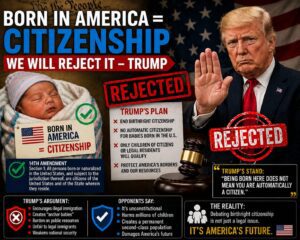
Former President Donald Trump has pushed to end automatic citizenship for children of undocumented immigrants.
In 2025, an executive action attempted to reinterpret the Constitution — triggering a legal battle now sitting in the Supreme Court.
The argument from one side:
– Birthright citizenship encourages illegal immigration
– It creates “anchor babies”
– It puts pressure on public resources
The argument from the other:
– Ending it could fundamentally change America
– It could create millions of non-citizens born inside the country
– It could damage long-term economic growth
And here’s the part most people are missing:
👉 This is not just a legal debate. It’s an economic one.
📉 America’s Silent Crisis: Fewer Babies, Slower Growth
Let’s look at what’s really happening behind the scenes.
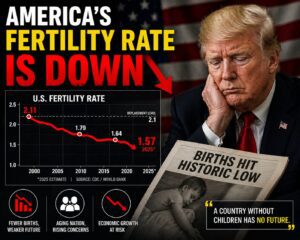
In 2025, the US fertility rate dropped to historic lows — around 1.57–1.60 births per woman
To maintain population stability, a country needs:
👉 2.1 births per woman
America is far below that.
Births are also falling:
– 2024 → ~3.63 million
– 2025 → ~3.60 million
This may not sound dramatic…
But it is.
Because when fewer babies are born:
– Future workers decrease
– Taxpayers shrink
– Economic growth slows
👉 “America isn’t having enough babies… and the economy is starting to feel it.”
👶 The Hidden Backbone: Immigrant Births
Now here’s the twist.
Nearly 1 in 4 babies in the US is born to immigrant parents.
And around 10% of all births are linked to undocumented or temporary immigrants
Let that sink in.
👉 Without immigrant families, US population growth would almost stall.
In fact:
– Immigration and immigrant births drive the majority of population growth
– Without them → population decline becomes real
This leads to a powerful contradiction:
👉 America depends on immigrants… while debating how to restrict them.
💰 The Economic Engine Nobody Talks About
Now let’s talk about money.
Because this is where things get serious.
A major 2026 economic analysis found:
👉 Birthright citizenship contributes $7.7 TRILLION to the US economy over time
That’s not a small number.
That’s:
– Millions of workers
– Trillions in income
– Massive tax contributions
Immigrants overall also:
– Boost GDP
– Increase consumption
– Support innovation
– Pay more in taxes than they receive long-term
👉 In simple terms:
They don’t just join the economy… they grow it.

💣 What Happens If Birthright Citizenship Ends?
Now let’s flip the scenario.
What if this system is removed?
👷 1. Labor Force Shrinks
Ending birthright citizenship could result in:
– 3.1 million fewer workers over time
– Loss of hundreds of thousands of skilled professionals
In a country already facing worker shortages…
This is a big problem.
📉 2. GDP Takes a Massive Hit
Estimates suggest:
👉 Up to $7.7 trillion in lost economic output
And potentially:
👉 1–2% slower GDP growth annually
That’s the difference between a strong economy… and a struggling one.
🚨 3. Illegal Population Could Rise — Not Fall
Ironically, ending birthright citizenship may:
– Increase undocumented population by millions
– Create a permanent non-citizen class
Around 250,000 children per year could be born without citizenship
👉 Instead of solving immigration…
It may actually make it worse.
🏗️ America’s Labor Problem Is Already Here
Even without policy changes, the US is already facing labor pressure.
Immigrants play a critical role in key industries:
– Construction → ~30% workforce
– Agriculture → ~20%
– Hospitality → ~21%
– Manufacturing → ~20%
Without them:
– Projects slow down
– Costs increase
– Businesses struggle
👉 “America’s physical economy runs on immigrant labor.”
📈 Stock Market Impact: Winners and Losers
Now let’s connect this to money markets.
🔻 Potential Losers
– Construction companies
– Real estate sector
– Agriculture & food industry
– Hospitality businesses
All depend heavily on labor availability.
🔺 Potential Winners
– AI & automation companies
– Robotics
– Tech innovation firms
Why?
👉 Because when workers disappear… machines replace them.
🧓 The Aging Time Bomb
Here’s the biggest long-term risk.
America is getting older.
– 65+ population rising rapidly
– Fewer young workers entering the system
The worker-to-retiree ratio is collapsing:
– 1970 → 5.7 workers per retiree
– 2024 → 3.4
– 2040 → ~2.7
This creates a massive problem:
👉 Social Security depends on workers paying taxes.
Fewer workers = less funding.
More retirees = more spending.
👉 Result: Financial pressure + economic slowdown
🌎 Global Perspective: Why the US Is Different
Most developed countries:
– Don’t offer full birthright citizenship
– Use “bloodline-based” systems
But the US is different.
And that difference has been a strength.
Because it:
– Attracts talent
– Boosts population growth
– Supports economic expansion
Removing it could make the US less competitive globally.
⚡ The Biggest Contradiction
Here’s the truth no one is saying clearly:
👉 America has two choices:
1. Accept immigration and grow
2. Restrict it and slow down
You can’t do both.
Because:
– Low birth rates + low immigration = economic stagnation
– High growth requires people — workers, consumers, taxpayers
💡 Investor Insight: Where Money Will Flow
If this trend continues, expect:
🔥 Growth Sectors
– AI & Automation
– Healthcare (aging population)
– Robotics
⚠️ Risky Sectors
– Labor-heavy industries
– Real estate
– Low-margin service businesses
🧠 Reality Check
Will birthright citizenship actually end?
Not easily.
Because:
– It’s part of the Constitution
– Requires major legal changes
– Faces strong opposition
But even the debate itself matters.
Because:
👉 Policy uncertainty affects markets, business decisions, and long-term planning.
⚡ Final Thought: A Silent Economic Turning Point
This isn’t just about immigration.
It’s about the future of the United States.
A country built on growth…
Now facing:
– Fewer births
– Slower population growth
– Political division
And a critical decision:
👉 Protect a system that fuels economic growth…
or risk slowing down the world’s largest economy.
❓ FAQs (SEO Boost)
What is birthright citizenship?
It’s a rule that gives automatic citizenship to anyone born in the US.
Can the US remove it?
Very difficult — it requires constitutional changes or major Supreme Court rulings.
Why is it important for the economy?
It increases workforce, boosts GDP, and supports population growth.
What happens if it ends?
Labor shortages, slower economic growth, and a potential rise in undocumented population.
—
2 thoughts on “US Citizenship Law Change? $7.7T Economic Shock Ahead”