Is 2026 the Most Dangerous Year for the Global Economy?
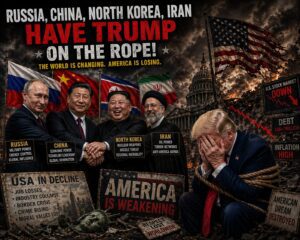
Right now, as you read this, the world is balancing on the edge of something far more dangerous than most people realize.
- Eastern Europe, missiles continue to strike Ukrainian infrastructure.
- In the Middle East, a fragile ceasefire hides tensions that could disrupt a critical global oil route at any moment.
- Asia, Chinese military pressure around Taiwan is becoming more frequent and more calculated.
And on the Korean Peninsula, nuclear threats are no longer distant warnings — they are active signals.
Individually, each of these conflicts is serious.
But together, they form a pattern — a pattern the global economy has not faced in decades.
Because if even two of these flashpoints escalate at the same time, the economic consequences could ripple across every major market.
And if more than two ignite simultaneously, the question is no longer whether markets will fall.
The real question becomes: how deep the damage will go.
This is not a prediction of World War III.
But it is a warning that 2026 is shaping up to be one of the most fragile geopolitical environments in modern history.
A World Under Pressure
The global conflict landscape entering 2026 is unlike anything seen in recent years. Multiple regions are experiencing sustained instability, and none of them are fully resolved.
The Russia–Ukraine war continues with no decisive breakthrough. Despite ongoing offensives and infrastructure attacks, the conflict has settled into a prolonged war of attrition. This kind of conflict doesn’t just drain military resources — it slowly erodes economic stability across Europe and beyond.
Meanwhile, tensions between Iran and Israel remain highly volatile. Even during periods of ceasefire, underlying issues such as proxy conflicts and control over strategic routes like the Strait of Hormuz keep the region on edge. This matters because a significant portion of the world’s oil supply flows through that single chokepoint.
In Asia, China’s increasing military pressure on Taiwan is being closely watched. Frequent airspace incursions and naval movements are not accidental — they are calculated signals. Taiwan is not just a geopolitical issue; it is the center of global semiconductor production. Any disruption here would impact everything from smartphones to defense systems.
On the Korean Peninsula, North Korea continues to demonstrate missile capabilities while reinforcing its nuclear stance. While a full-scale conflict remains less likely, the unpredictability of the region adds another layer of global risk.
When viewed together, these conflicts are not isolated events.
They are interconnected stress points in an already strained global system.
Can the United States Handle Multiple Wars?
The United States remains the most powerful military force in the world, with a defense budget exceeding $1 trillion. Its naval fleets, air dominance, and technological advantage give it unmatched capability in single-theater operations.
But modern warfare is not just about strength — it’s about sustainability.
- Fighting one major conflict is difficult.
- Fwo simultaneously stretches logistics, supply chains, and political will.
- Fighting across three or more regions introduces risks that even the strongest military cannot ignore.
Recent defense assessments suggest that while the U.S. can manage one major war effectively, handling multiple large-scale conflicts at the same time would push its systems to their limits. Factors such as troop readiness, alliance reliability, and resource distribution all become critical constraints.
This doesn’t mean the U.S. is weak.
It means the nature of global conflict has changed.
And that change introduces uncertainty — not just for governments, but for global markets.
The Four Flashpoints That Matter
1. Iran–Israel: The Oil Shock Risk
- This is not just a regional conflict — it is a global economic trigger.
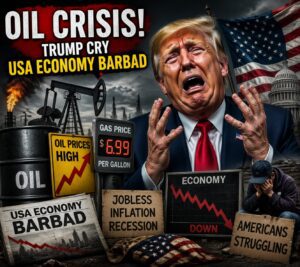
- The Strait of Hormuz, located near Iran, handles nearly 20% of the world’s oil supply. Any disruption here could send oil prices sharply higher within days.Even limited escalation could push energy markets into volatility.
- A prolonged disruption could drive prices toward extreme levels, fueling inflation across major economies. And when energy prices rise, everything else follows.
2. Russia–Ukraine: The Long War
- Unlike sudden conflicts, prolonged wars create slow, persistent pressure.
- Energy markets remain sensitive to developments in the region. Europe continues to adjust to supply disruptions, while global markets react to uncertainty in commodities and trade routes.
- This war may not cause an immediate crash.
But it steadily weakens economic confidence over time.
3. China–Taiwan: The Technology Risk
Taiwan produces the majority of the world’s advanced semiconductors. These chips power everything from smartphones to military systems.
Any conflict involving Taiwan would not just be geopolitical — it would be technological and economic at a global scale.
- Supply chains would break.
- Production would slow.
- Entire industries could face disruption.
This is one of the highest-impact risks in the current global landscape.
4. North Korea–South Korea: The Unpredictable Factor
While the probability of full-scale war remains lower compared to other regions, the risk here lies in unpredictability.
Missile tests, military exercises, and political signaling create a constant state of tension. Even a small miscalculation could escalate quickly.
And in a world already dealing with multiple conflicts, even a smaller crisis can have amplified effects.
Is 2026 war year?
2026 war year The answer is complex.
- On one hand, the number of active conflict zones and geopolitical tensions is unusually high. Global risk assessments consistently rank state-based conflict among the top threats.
- On the other hand, large-scale global war is not inevitable.
- Diplomacy still exists.
- Economic interdependence still matters.
- And major powers understand the cost of uncontrolled escalation.
- So 2026 may not become a full-scale war year.
But it is undeniably a high-risk year — one where multiple smaller events could combine into a much larger shock.
What Happens to the Stock Market?
History provides an important insight: markets react quickly to fear, but they do not stay down forever.
In the short term, geopolitical shocks often trigger sharp declines. Panic selling, uncertainty, and volatility dominate investor behavior.
If multiple conflicts escalate, global markets could see declines in the range of 10% to 30%, depending on severity.
But there is another side to the story.
Markets have historically recovered after geopolitical shocks — sometimes faster than expected. The key factor is whether the conflict disrupts core economic systems like energy supply or global trade.
The Oil Factor
Oil is the single most important variable in any conflict scenario.
- If supply remains stable, markets may recover relatively quickly.
- If supply is disrupted, the situation changes entirely.
Oil prices moving toward $120–$150 would increase inflation and slow economic growth.
A move toward $200 or beyond could trigger recession-like conditions globally.
This is where geopolitical tension directly connects with everyday life — from fuel prices to food costs.
Three Possible Scenarios
Best Case
- Conflicts remain contained.
- Diplomatic efforts prevent escalation.
- Markets stabilize, and economic growth continues.
Medium Case
- Two major conflicts continue simultaneously.
- Oil prices rise moderately.
- Markets experience volatility but avoid collapse.
Worst Case
Multiple conflicts escalate at once.
Oil supply is disrupted.
Markets decline sharply, and global economies enter recession.
At that point, the situation is no longer just geopolitical.
It becomes systemic.
What Smart Investors Are Watching
During times of uncertainty, investor behavior changes.
Safe-haven assets like gold and government bonds often see increased demand. Energy and defense sectors may outperform due to rising geopolitical demand.
Meanwhile, highly sensitive sectors such as technology and consumer goods may face pressure.
The biggest mistake investors make during these periods is reacting emotionally. Panic selling often leads to missed recovery opportunities.
Because historically, the strongest gains often follow the periods of greatest fear.
A Necessary Reality Check
- It is easy to assume the worst when multiple risks appear at the same time.
- But history shows that not every tension leads to full-scale war.
- Many conflicts remain contained.
- Many crises are resolved before reaching their peak.
- the same time, ignoring risk entirely is equally dangerous.
- The truth lies somewhere in between.
Conclusion
- 2026 may not become the year of global war.
- But it may become the year that tests how resilient the global system really is.
- Multiple conflicts, rising economic pressure, and fragile supply chains are all signals that cannot be ignored.
- For governments, this is a test of strategy.
- For markets, it is a test of stability.
- And for individuals, it is a test of awareness.
- Because in times like these, the difference between fear and preparation defines the outcome.
- And while the world may not collapse, it may shift — faster than most are ready for.
FAQ
Is World War III likely in 2026?
Not necessarily, but the risk of multiple simultaneous conflicts is higher than usual.
Will the stock market crash?
Short-term volatility is likely during escalations, but long-term recovery has historically followed.
What is the biggest economic risk?
Oil supply disruption, especially through key routes like the Strait of Hormuz.
How should investors prepare?
Stay diversified, avoid panic decisions, and focus on long-term strategy.
This is not a moment for panic.
But it is definitely a moment to pay attention.
1 thought on “WARNING: These 4 Wars Could Crash US Stocks in 2026”